To actually make fusion happen on Earth, scientists have developed two main approaches:
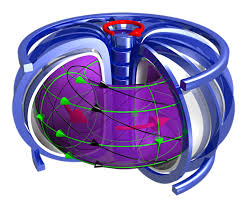
Magnetic Confinement Fusion (MCF):
Magnetic fusion uses strong magnetic fields to trap and control hot plasma, which is a superheated gas of charged particles. These particles move along magnetic field lines, so by creating the right magnetic “cage,” we can keep the plasma from touching the walls. The two most well-known machines that do this are tokamaks and stellarators. They are large vacuum chambers with powerful magnets that shape the plasma into a doughnut-like ring and hold it in place long enough for fusion to happen.
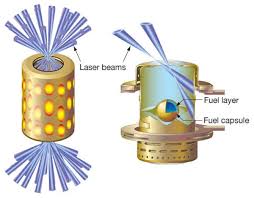
Inertial Confinement Fusion (ICF):
In this method, a tiny fuel pellet (made of deuterium and tritium) is hit from all sides by powerful laser beams. The outer layer of the pellet blasts outward, and as a result, the inner part gets pushed inward. This causes the fuel to compress and heat up quickly—just enough for fusion to happen for a brief moment. This is called inertial confinement fusion because the fuel’s own inertia (resistance to movement) helps trap it long enough for fusion to occur.